SENSOR / MEASURE
Mini Weighing Scale
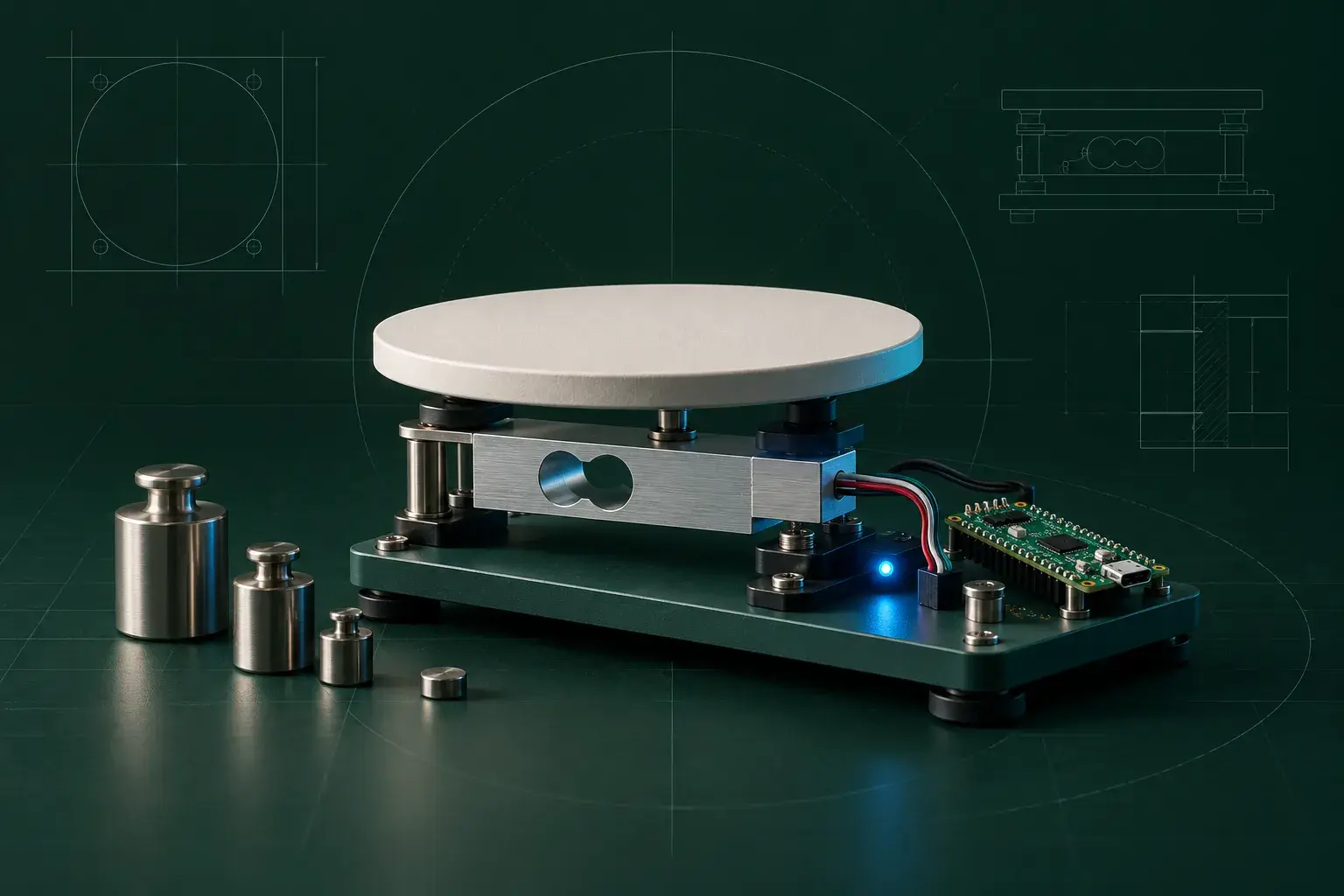
A Raspberry Pi Pico reads an M5Stack mini scale module over I²C and streams measurements over USB serial. Builders mount the weighing platform, tare the empty scale, and calibrate it with a known mass.
EST. €23.30
Build #29
Build plan
Make it
your own.
- Build time
- 2.5–4 hours
- Main interface
- I²C + USB serial
- 01Mount the scale module beneath a small flat platform using its M3 mounting points and nuts.
- 02Connect its supplied four-pin cable to Pico 3.3V, ground, SDA, and SCL using the jumper leads.
- 03Read the module over I²C and send the weight readings to a computer over USB serial.
- 04Tare the empty platform, then calibrate the reading against a known mass.
- 05Repeat the same measurement to compare stability; keep the total load below 5 kg.
- The platform and a known calibration mass are workshop materials; the scale module includes its cable and M3 nuts.
- Load the sensing platform vertically and avoid side force or overloading the 5 kg module.
Bill of materials
Parts list
BerryBase parts were listed in stock on 1 Oct 2026. Stock and prices can change; workshop materials are listed separately.
ItemCost
- 01Raspberry Pi Pico WHIn stock · checked 1 Oct 2026
- 02M5Stack Mini Scales Unit (5kg, I²C)In stock · checked 1 Oct 2026
- 03400-point breadboardIn stock · checked 1 Oct 2026
- 0440-pin Dupont jumper-wire assortmentIn stock · checked 1 Oct 2026
- 05Raspberry Pi Micro USB cableIn stock · checked 1 Oct 2026
- 06Workshop mounting platform and calibration massWorkshop stock required€0.00workshop
Estimated build total€23.30